How Hotels Can Manage Booking.com, Agoda, Expedia and Other OTAs From One Place
Independent hotels selling on multiple OTAs often end up managing each platform by hand, logging into separate dashboards for Booking.com, Agoda, and Expedia to update the same rate over and over. That manual approach leads to double bookings, rate mismatches, and wasted staff hours. A hotel channel manager solves this by centralizing rate updates, availability sync, and reservations across all connected OTAs in one dashboard, while also supporting direct bookings through a hotel's own website. The article covers why manual OTA management breaks down, what a channel manager does day to day, what to look for when choosing one, and how a hotel can roll one out without disrupting current bookings.
Table of contents

Ask any hotel manager what eats up their morning and you'll hear some version of the same story. Log into Booking.com to update a rate. Switch tabs, log into Agoda, do it again. Then Expedia. Then MakeMyTrip, if you're in India. By the time all the calendars match, half the day is gone and a room that should have been blocked already got booked twice.
This is the reality for a huge number of independent hotels and small chains. OTAs (online travel agencies) bring in a large share of bookings, sometimes 40 to 60 percent of total revenue for a property with no strong direct booking base. But every OTA runs its own dashboard, its own rules, its own quirks. Managing five or six of them by hand isn't just tiring, it's how double bookings, rate mismatches, and lost revenue happen.
A hotel channel manager exists to fix exactly this problem. It's software that connects to every OTA a hotel sells on and lets the team manage rates, availability, and inventory from a single screen. Update a rate once, and it pushes out to Booking.com, Agoda, Expedia, Goibibo, and whatever else is connected, all within seconds.
This article walks through why OTA hotel management gets messy without the right tools, what a channel manager actually does, how to pick one, and what changes once it's running.
Why Managing OTAs Manually Falls Apart
Most hotels start on OTAs one at a time. List on Booking.com first, since it's the biggest. Add Agoda a few months later. Then someone suggests Expedia because a competitor is getting bookings from it. Before long the front desk is juggling four, five, sometimes eight different extranets, each with a different login, different UI, and different cutoff rules for cancellations.
Here's where it breaks down in practice:
Overbookings. A room shows available on three OTAs at once. Two guests book it for the same night. Someone has to make an awkward phone call, offer a walk to another property, and eat the cost.
Rate parity issues. A rate gets updated on Booking.com but the team forgets to mirror it on Agoda. Now the same room is priced differently across platforms, which OTAs actively penalize hotels for, sometimes by pushing the listing lower in search results.
Wasted staff hours. Someone on the team is manually updating five calendars every single day, sometimes multiple times a day during a rate change or event. That's real payroll going toward data entry instead of guest service.
Missed rate opportunities. Demand shifts fast around weekends, festivals, and local events. If updating rates across platforms takes an hour of manual work, most small hotels simply don't bother, and money gets left on the table.
None of this is a staffing problem. It's a tooling problem, and it's the exact gap a channel manager is built to close.
What a Hotel Channel Manager Actually Does
At the core, a channel manager sits between your property and every OTA you're connected to, syncing data in both directions.
Centralized rate and inventory updates. Change a rate or block a room once, in one dashboard, and it reflects everywhere within moments. No more logging into six extranets to do the same task six times.
Real-time availability sync. The moment a room is booked on Agoda, it disappears from Booking.com, Expedia, and every other connected channel. This is the single biggest reason double bookings happen less, or stop happening at all.
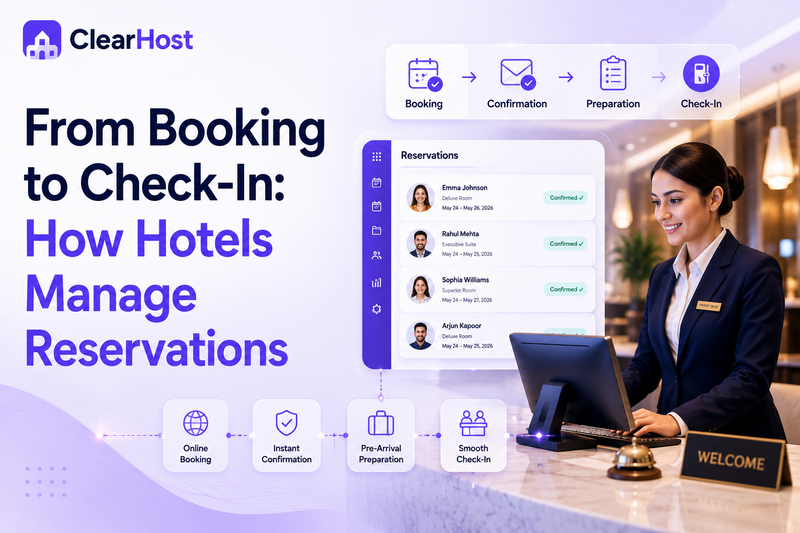
Unified booking management. Reservations from every OTA land in one place instead of scattered across separate inboxes and dashboards, so front desk staff aren't hunting for a booking confirmation across five tabs.
Restriction controls. Minimum stay, maximum stay, closed-to-arrival, closed-to-departure. These can all be set once and applied across every connected OTA rather than configured channel by channel.
Often connects to a PMS too. Many channel managers plug directly into a property management system, so front desk operations, housekeeping status, and OTA bookings all live in one workflow instead of three disconnected ones.
For hotels in India specifically, this matters even more given how many OTAs are relevant here. Beyond the global names, properties often need to manage MakeMyTrip, Goibibo, Yatra, and various regional players alongside Booking.com and Expedia. A tool built with the Indian OTA landscape in mind, rather than one designed only for Booking.com and Expedia, tends to save a lot of friction. ClearHost is one example built specifically around this need, connecting a hotel's inventory across the OTAs that actually matter in the Indian market.
Direct Bookings vs. OTA Bookings
A channel manager's job isn't to replace direct bookings, it's to make OTA bookings less painful to run alongside them. That said, most channel managers today also help hotels build a direct booking channel of their own, usually through a booking engine tied to the hotel's website.
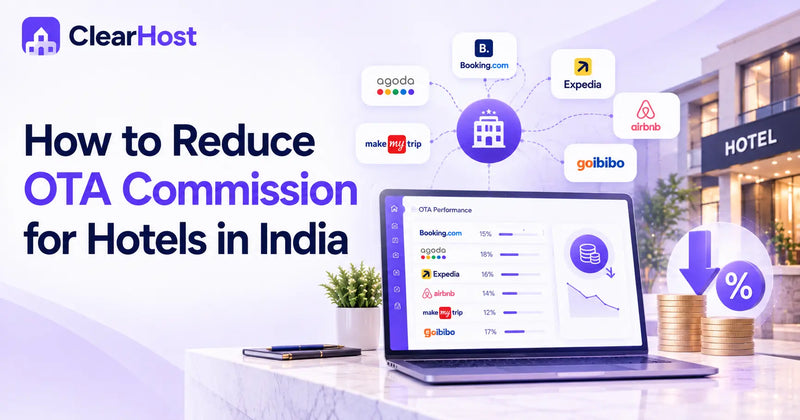
This matters because OTAs charge commissions that typically run 15 to 25 percent per booking. Every reservation that comes in directly instead saves that cut. A well-run hotel usually wants both: OTAs for visibility and reach, and a strong direct channel to keep margins healthy. A channel manager that also supports a direct hotel booking engine lets a property push the same real-time rates and availability to its own website, not just to third-party platforms.
What to Look For When Choosing One
Not every channel manager fits every hotel. A 12-room homestay and a 150-room business hotel have different needs. Here's what tends to matter most when comparing options.
OTA coverage. Confirm the tool actually connects to the OTAs your hotel sells on, including regional ones if you're outside the US or Europe. A channel manager that only supports the big global names isn't much use to a hotel that gets most of its bookings from a regional platform.
Sync speed. Some tools update every few minutes, others closer to real time. For high-occupancy properties, faster sync directly reduces the chance of a double booking slipping through in that gap.
Ease of use. A dashboard that takes a week of training to operate defeats the purpose. Front desk staff often need to use this tool daily, so it needs to be something a new hire can pick up in an afternoon.
PMS integration. If the hotel already runs a property management system, check that the channel manager connects to it rather than becoming a second, disconnected system to maintain.
Support and onboarding. OTA connections can be fiddly to set up the first time, particularly getting API access approved on platforms like Booking.com. Good support during setup, and reasonably fast support afterward when something breaks, matters more than most buyers expect going in.
Pricing that fits the property size. Some tools charge a flat monthly fee, others charge per booking or per room. A 10-room guesthouse and a 200-room hotel should not be paying the same pricing structure, and it's worth checking which model actually works out cheaper at your scale.
What Changes Once a Channel Manager Is Running
The most immediate change is time. Tasks that used to take an hour across five extranets take a couple of minutes in one dashboard. That time usually goes back into things that actually need a human, like guest requests, upselling, or just running the front desk properly instead of babysitting spreadsheets.
The second change is fewer mistakes. Overbookings drop sharply once availability syncs in real time instead of depending on someone remembering to update every channel. Rate mismatches stop happening because there's only one place to set a rate in the first place.
The third, and probably the one that matters most for revenue, is that rate changes actually happen when they should. A weekend rate bump, a last-minute discount to fill a slow Tuesday, a price adjustment because a big event just got announced nearby. These take seconds to push out instead of an hour of manual updates across six platforms, so hotels that were previously too busy to bother start actually doing it. That alone tends to move revenue more than any other single change a channel manager brings.
A Realistic Way to Get Started
Switching from manual OTA management to a channel manager doesn't need to happen all at once. A sensible rollout looks something like this:
-
List every OTA the property currently sells on, including smaller regional ones that sometimes get forgotten in these audits.
-
Shortlist two or three channel managers that cover all of those platforms, not just the big ones.
-
Run a short trial or demo with actual staff who'll be using it day to day, not just management deciding on their own.
-
Migrate one OTA connection at a time rather than switching everything simultaneously, so any hiccup is contained and easy to trace.
-
Train the front desk properly before fully relying on it, since a tool used incorrectly causes the same problems it was meant to solve.
Most hotels see the syncing benefits within the first week. The rate-management habits, actually adjusting prices in response to demand instead of leaving them static, tend to build up over the following month or two as staff get comfortable with how fast changes can go live.
Final Thoughts
Managing Booking.com, Agoda, Expedia, and every other OTA by hand was never really a long-term way to run a hotel. It worked when a property was only on one or two platforms, but the moment a third or fourth OTA gets added, the manual approach starts costing more in staff time and booking errors than it's worth.
A hotel channel manager isn't a luxury feature for large chains anymore. Independent hotels and small groups get just as much, arguably more, out of centralizing OTA hotel management, since they usually don't have a large team to absorb the extra manual work in the first place. One dashboard, synced rates, and fewer 2 a.m. phone calls about a room that got booked twice. That's really the whole pitch.
FAQs
1. What is a hotel channel manager?
It's software that connects a hotel's room inventory to multiple OTAs like Booking.com, Agoda, and Expedia at once, so rates and availability can be updated from a single dashboard instead of logging into each platform separately.
2. Does a channel manager replace a property management system (PMS)?
No. A PMS handles day-to-day hotel operations like check-in, check-out, housekeeping, and billing. A channel manager handles OTA distribution. Many hotels use both together, and the best channel managers integrate directly with a hotel's PMS.
3. Will a channel manager stop double bookings completely?
It significantly reduces them by syncing availability across OTAs in near real time, but it can't fully eliminate the risk if sync intervals are slow or if a booking comes in through a channel that isn't connected. Faster sync speeds lower that risk further.
4. Is a channel manager worth it for a small hotel with under 20 rooms?
Usually yes. Smaller hotels tend to have less staff to spare for manual rate updates across multiple OTAs, so the time saved often matters more proportionally than it does for a large property with a dedicated revenue team.
5. Can a channel manager help with direct bookings too?
Many channel managers, including ClearHost, also support a direct booking engine for the hotel's own website, letting the property push the same live rates and availability directly to guests and avoid OTA commission on those bookings.