Hotel Management Software: A Complete Buyer's Guide for 2026
Table of contents

Every hotel software website says the exact same thing: all-in-one, easy to use, built for hotels of any size. So how do you actually tell them apart? A good hotel management software should do a few things well: keep reservations, housekeeping, channel management, and reporting under one roof, work whether you're running one property or ten, and not cost so much that it eats into your margins. This guide goes through what actually matters when you're choosing between a hotel PMS software, a full hotel property management system, or a broader hospitality management software, so you end up picking something that fits your hotel, not just whatever had the best sales pitch.
Why Choosing the Right Hotel Management Software Actually Matters
Most hotels end up picking software the way they'd pick furniture, whatever looked good during the demo. Then, a few months in, the cracks show up.
A hotel management system isn't just there to take bookings. It affects how fast a guest gets checked in, whether housekeeping actually knows which rooms are ready, how well your rates line up across OTAs, and whether your staff is all looking at the same information or still passing notes between five different spreadsheets.
What to Look for in Hotel Management Software
1. Reservation and Booking Management
View, edit, and manage bookings from one screen- no hopping between tabs. Real-time availability means you're not crossing your fingers over a double booking.
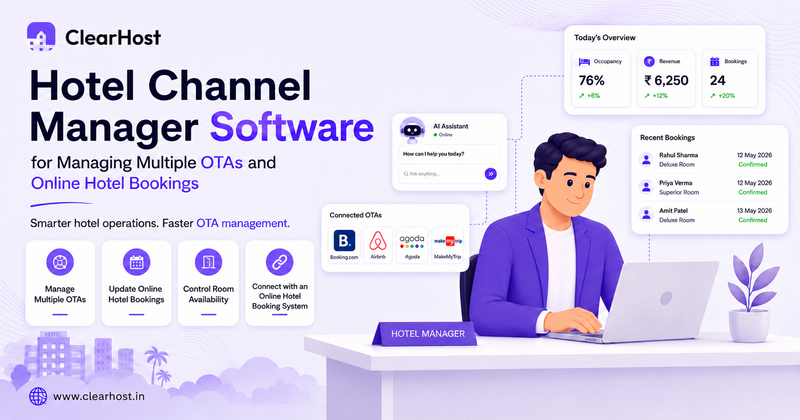
2. Hotel Management Software with Channel Manager
Listed on Booking.com, MakeMyTrip, Agoda, or Expedia? You really need a channel manager built in. Try updating rates by hand on each platform, and it's only a matter of time before something gets missed.
3. Housekeeping and Maintenance Tracking
Housekeeping needs a simple way to mark a room clean, dirty, or under maintenance the moment it happens, so the front desk isn't guessing.
4. Reporting and Analytics
Hard to fix what you can't see. Good software lays out occupancy, revenue, cancellations, and booking sources right there, no exporting to Excel just to make sense of it.
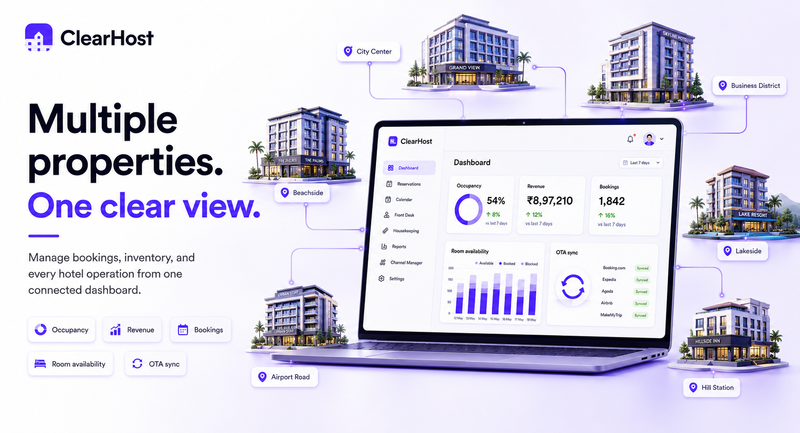
5. Support for Multi-Property Management
More than one hotel? You need one dashboard for all of them, not five separate logins.
6. Integrated Booking Engine
A booking engine on your own site means guests book directly with you instead of paying an OTA commission.
7. Ad Manager
Some software now bundles in an ad manager, so you're not switching to a separate tool to run ads.
8. AI-Based Smart Management
A few systems use AI to spot a busy weekend coming, a rate worth adjusting, a pattern worth noticing. Doesn't replace a good manager, just catches things faster.
9. Invoice and Billing System
Built-in invoicing handles taxes, add-ons, and payments on its own, so nobody's doing math by hand at checkout..
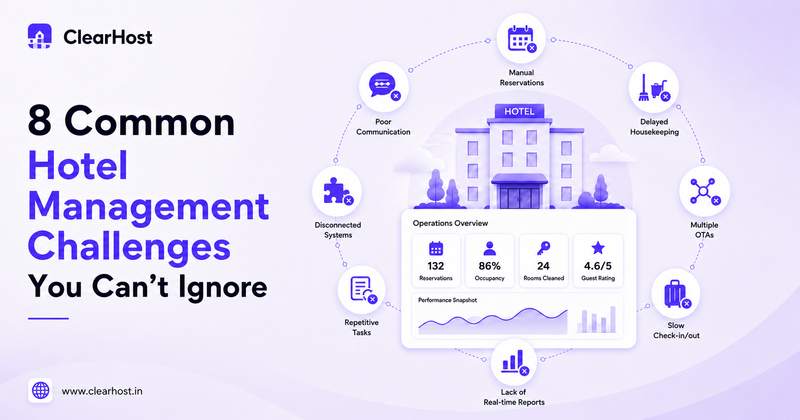
Signs It's Time to Upgrade Your Hotel Software
If you're experiencing any of these issues, it may be time to switch to a modern solution:

Quick Checklist Before You Buy
| Feature | Must Have |
| Hotel PMS | ✅ |
| Channel Manager | ✅ |
| Booking Engine | ✅ |
| Housekeeping Module | ✅ |
| Billing & Invoicing | ✅ |
| Mobile Access |
✅ |
| Reports & Analytics | ✅ |
| Customer Support | ✅ |
How Hotel Management Software Improves Daily Operations
|
Hotel Task |
Manual Process |
With Hotel Management Software |
|---|---|---|
|
Reservations |
Time-consuming |
Automated |
|
OTA Updates |
Manual |
Real-time sync |
|
Billing |
Manual invoices |
Automated invoices |
|
Housekeeping |
Phone calls |
Live status updates |
|
Reports |
Excel sheets |
One-click reports |
|
Guest Check-in |
Slow |
Fast & digital |
All-in-One Hotel Management Software vs Standalone Tools
Some hotels run one tool for bookings, another for housekeeping, and a third for reports. Fine if you've got a tiny property, but the second a hotel starts growing, this setup starts causing more trouble than it's worth.
An all-in-one hotel management software fixes this pretty simply. Reservations, housekeeping, channel management, and reports all sit under one login, so the whole team is looking at the same numbers instead of five different versions of the truth.
Final Thoughts
There's no one "best" hotel management software out there. A small guesthouse and a five-property chain just need different things. Focus on what's actually slowing you down, slow check-ins, messy OTAs, reports that never make sense, and pick software that fixes that. Try the demo, ask blunt questions, and go with what fits your hotel, not the flashiest pitch. Tools like ClearHost are worth a look if you want reservations, housekeeping, and reporting under one roof, but the same logic applies: test it against your own daily problems before deciding.
Frequently Asked Questions (FAQs)
Q1: What is hotel management software?
Think of it as one place that handles bookings, housekeeping, billing, and reports, instead of you tracking all of it separately. People also call it a hotel property management system.
Q2: Can hotel management software handle multiple properties?
Yes. Several systems are built for this, like ClearHost: one dashboard, several properties, no separate logins.
3. What is hotel management software with a channel manager?
It is a system that automatically updates room availability, rates, and bookings across OTAs like Booking.com, Airbnb, Agoda, and MakeMyTrip. This helps prevent overbookings.
4. What is the hotel management software price in India?
The price of hotel management software in India depends on several factors. These include the number of rooms, features, and whether it is cloud-based or on-premises. It also depends on whether the software supports properties. Most providers offer plans on a yearly basis.
5. Is an all-in-one hotel management software better than separate tools?
For most hotels, an all-in-one hotel management software is better. With one system, there are errors. Everyone works with the numbers.
6. Can hotel management software support properties?
Yes, hotel management software can support properties. This type of software allows owners and managers to oversee locations from one dashboard. It makes it easier to manage inventory, pricing, reports, and performance across properties.